
HEALTHCARE TRAINING
> Home > Healthcare projects > Healthcare training
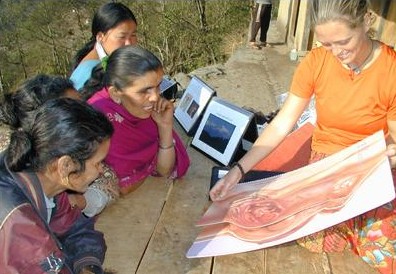
Rebecca Nagle explaining the effects of nutrition in foetal development
Continuing healthcare needs
Since building Ghunsa School and health clinic in 1990, KSP has been continuously involved in training healthcare workers
and in generally assessing village healthcare needs.
Two healthcare workers now operate in the Kangchenjunga valley, one at the Ghunsa clinic and the other at the Folay
clinic. KSP pays the salary of the Ghunsa healthcare worker; the Tibetan government-in-exile pays for the healthcare worker
in Folay.
Through the British Nepal Medical Trust, the Hill Drug Company periodically trains the healthcare workers in diagnosis
and in dispensing appropriate medications for common ailments, such as upper-respiratory infections, diarrhœa, and
intestinal parasite infections. The company also screens for tuberculosis.
KSP provides both general and maternal healthcare training from time to time, as needed and as medical volunteers are
available.
Maternal healthcare
Both of the healthcare workers are male, so there is limited attention to women's health, particularly reproductive health.
This program aims to train a local woman to provide the maternal and gynecological needs of the women in four villages.
She provides prenatal, perinatal, and postnatal care of the mother and child. KSP is providing the funds for the tuition,
living costs, and the salary for this much needed position.

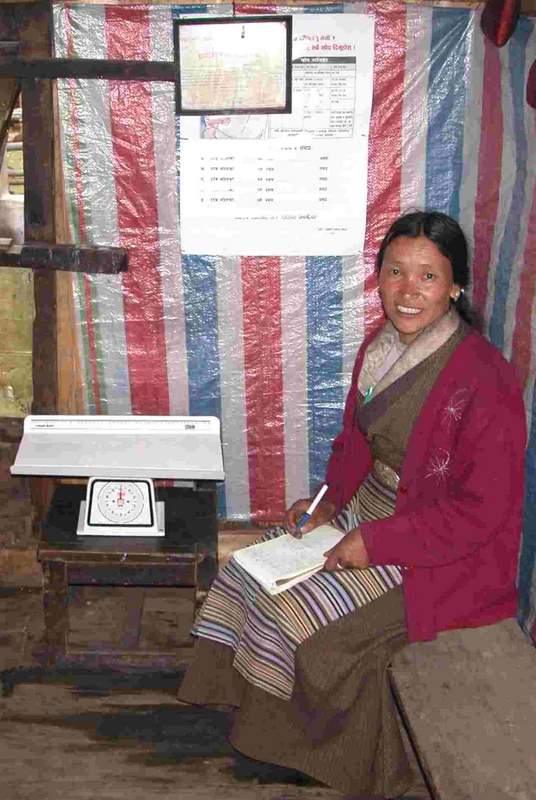
Maternal health worker, Ghunsa